Contributed Article, Press

Expert Consensus on Remote Monitoring: Key Staffing Takeaways

Expert Consensus on Remote Monitoring: Key Staffing Takeaways Recent recommendations for remote monitoring of implantable devices may require healthcare organizations to rethink how they staff their operations This past spring, electrophysiology experts issued new recommendations for remote monitoring of cardiovascular implantable electronic devices (CIEDs). The expert consensus statement — released jointly by four major cardiac electrophysiology societies — covers everything from patient enrollment to connectivity. More than anything, though, I was struck by the recommendations around staffing. The first “take-home message” listed in the report is that remote monitoring is the standard of care for patients with implantable cardiac devices. However, this has been the case since at least 2015, and I would estimate that only around half of patients with CIEDs are enrolled in remote monitoring programs. Even for those who are remotely monitored, service levels are highly inconsistent. I’ve heard stories of patients who have turned off their transmitters, and no one contacted them about the missing signal for weeks, simply because providers were overwhelmed or didn’t have the proper resources to track disconnected devices. This is one example of why these new staffing recommendations are so important. If we provide an aging population with the best care possible, healthcare organizations must first learn how to train and manage the employees needed to monitor remote devices effectively; or educate them on third-party resources available to help fill the gaps. The key staffing takeaways from the report include the following. Three Employees to Monitor 1,000 Patients “For the care of patients with CIEDs on [remote monitoring],” the report states, “it is reasonable for clinics to have a minimum of 3.0 full-time equivalents per 1,000 patients on [remote monitoring], comprising both clinical and administrative staff.” Now, this may not sound like an overly burdensome staffing ratio, but many healthcare organizations struggle to attract and retain staff. To meet the needs of the future — most providers will need to step up their staffing, become dramatically more efficient, or both. With a third-party tool, clinics can expand capacity without adding to their headcount. For organizations that use Implicitly, it is relatively common for a clinic to maintain only three full-time employees to manage remote monitoring for up to 5,000 or more patients. The Importance of Certification and Training Providers who oversee — or who review, manage, document or bill for remote monitoring of implantable cardiac devices — should be able to demonstrate their expertise in CIED management by holding appropriate education and certifications, the recommendations state. Further, the expert consensus holds that these education and certification efforts should be supported (i.e., funded) by employers and that all staffers involved with remote monitoring should engage in quality improvement reviews to support current evidence-based standards. Translation: It’s not enough to merely hire an appropriate number of employees. Providers must continue to train their staff on an ongoing basis. A Transition to Alert-based Monitoring For patients who lack continuous connectivity, it is recommended that they make remote transmissions every 3 to 12 months, depending on device type. However, the recommendations note that continuous connectivity allows providers to monitor patient data based on specific alerts rather than at time-based intervals. Alert-based monitoring became more common during the COVID-19 pandemic out of necessity, and it showed promising results, with the potential to make remote monitoring staffers more efficient. According to the report, alert-based monitoring “could minimize low-value effort, optimize clinic visits for actionable events, and decrease health care costs.” Read the full article here.
Contributed Article, Press

5 Reasons why AI is Different in Healthcare

5 Reasons why AI is Different in Healthcare Healthcare is one of many sectors poised for AI transformation, but it poses unique challenges, opportunities, and considerations. For those of us who have been working closely with artificial intelligence (AI) for many years, it’s a little shocking to suddenly hear “AI” on the tips of everyone’s tongues. Although it may be difficult for the technology to match the current hype, there are many valuable use cases across industries, and that number is sure to grow quickly as the technology improves and organizations begin to experiment with different solutions. Healthcare is no exception, but while AI undoubtedly will help clinicians become more efficient and improve patient outcomes, the sector differs from other fields in these important ways: ‘Good Enough’ is not good enough: In some fields, AI tools are going to perform slightly worse than humans, at least at first, and this is going to be okay. People are already using AI to draft response emails, for instance, and it’s not the end of the world if these tools fail to capture your tone and voice with perfect accuracy when confirming a video meeting. Basically, if an AI tool’s performance is only 90% as good as a human’s, but it makes a process significantly faster or simpler, that tradeoff will work for many people, workflows, and industries. But this tradeoff won’t work in health care. Patients’ lives are on the line when clinicians change the way they deliver care, and providers simply won’t use AI tools that force them to compromise on quality—no matter how efficient those tools may be. The ‘Quintuple Aim’: Although some companies truly are committed to social equity, corporations have a fiduciary responsibility to maximize returns for their shareholders. This bottom-line focus stands in contrast to health care, where the idea of a “Triple Aim” – incorporating the patient experience, population health, and costs – has been widely accepted for many years. More recently, this has expanded to a “Quintuple Aim,” incorporating staff experience and health equity. The emphasis on equity, in particular, sets the goals of healthcare organizations apart from many businesses in other sectors. While corporations will often shutter stores in areas that have become unprofitable, health care has an ethical obligation to try to bring high-quality care to all populations, including in underserved locations. The AI tools adopted by the sector will reflect this emphasis. Read the full article here.

Contributed Article, Press

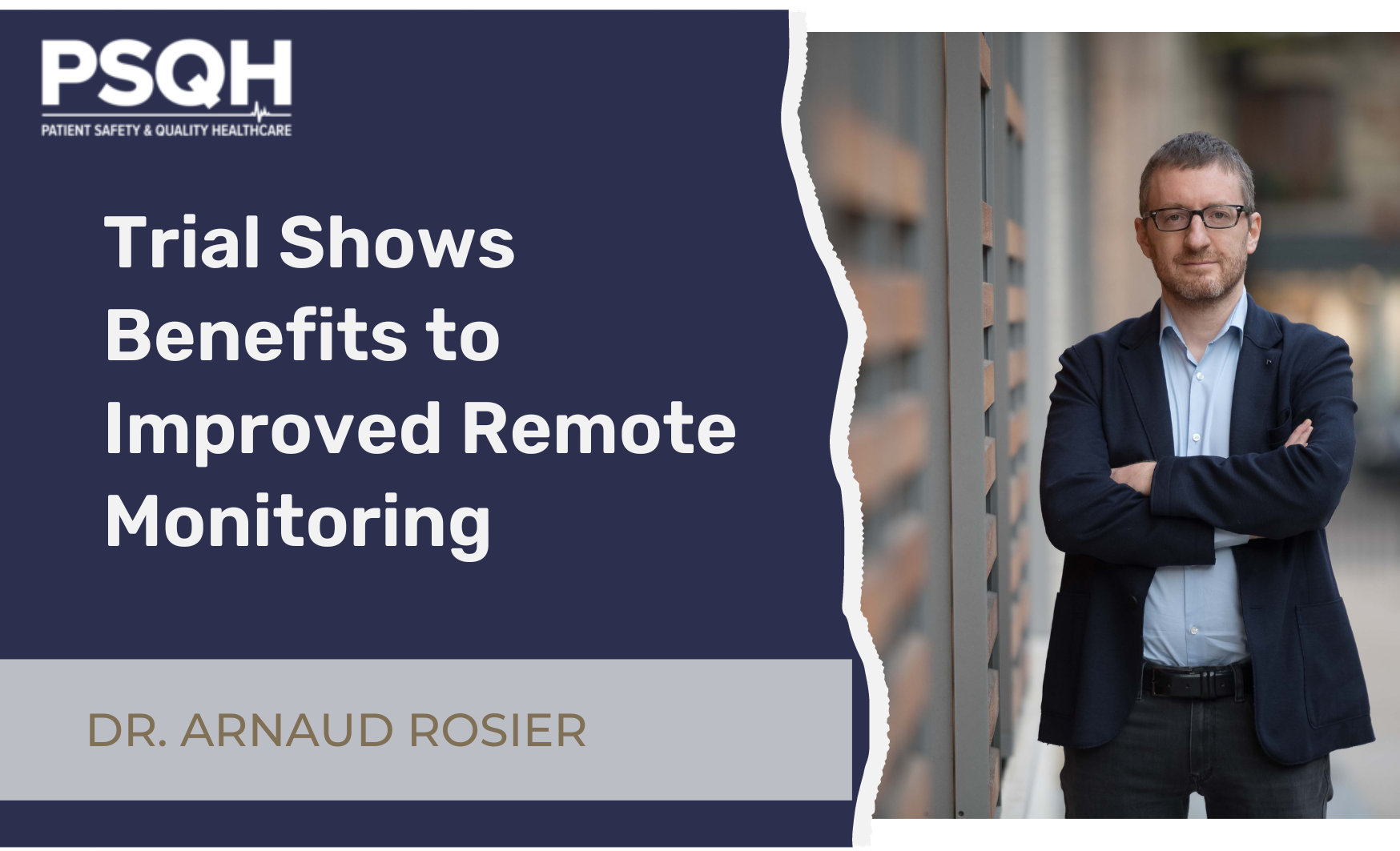
PSQH Interviews Implicity CEO and Electrophysiologist, Arnaud Rosier MD

PSQH Interviews Implicity CEO and Electrophysiologist, Arnaud Rosier MD A new clinical trial on remote monitoring found that while all patients involved saw improved survival rates, the type of remote monitoring had a significant impact. Implicity, a developer of alert-based remote monitoring solutions, in collaboration with the Health Data Hub, looked at a database of over 68,000 patients linking real-world data from patients with cardiac-implantable electronic devices (CIED) to remote monitoring methods and compared mortality rates, annual hospitalizations, and the cumulative duration of hospital stays. The results demonstrated that alert-based monitoring using Implicity’s platform was associated with greater performance compared to historical manufacturer solutions. “We always say remote monitoring is better, but the reality is when it comes to science and evidence, there are not that many examples of proven clinical evidence of better outcomes with remote monitoring,” says Arnaud Rosier, CEO of Implicity. Remote monitoring of cardiac implants (such as connected pacemakers) is a niche area, Rosier says, and thus, there are few studies looking at how remote monitoring for cardiac care impacts mortality, rehospitalization, and cost reduction. “As a physician, I and my colleagues know the value of remote monitoring. If you’re using a pacemaker and not being remotely monitored, your care is probably not being handled well by your physician,” says Rosier. The study was in part intended to bridge the gap in proving the value of this type of monitoring. It wanted to examine not just the monitoring itself, but how the software used for that monitoring played into patient outcomes. One of the reasons to look at remote monitoring for cardiac care now is the opportunity to decrease the burden. “Fifteen years ago, it was a burden—we knew it was beneficial, but it was such a pain to manage all the information coming through. The industry wasn’t organized to triage all the data coming in,” says Rosier. “It’s not what we were trained to do as physicians.” Read the full article here.  
Contributed Article, Press

Building an Effective Hybrid Practice

Building an Effective Hybrid Practice Telemedicine is here to stay. But that doesn’t mean that in-person healthcare is going anywhere – soon or ever. It’s becoming clear that a hybrid approach is the way forward for the healthcare sector, with many hospitals and clinics already relying on remote technologies that they scaled up dramatically during the COVID-19 pandemic. As a result of that experience, previously reluctant clinicians and patients have grown accustomed to telemedicine solutions, and reimbursement policies have begun to catch up with the technology. Telemedicine visits and remote patient monitoring (RPM) expand access to care, help alleviate the challenges associated with provider shortages, and in many instances, are more convenient for patients. While alternatively, in-person care is sometimes preferred (and often necessary) for specific patients, tests, and treatments. Much of the technology needed to provide excellent hybrid care is already here, but healthcare organizations are still struggling to effectively stitch solutions together in ways that lead to both manageable workflows and improved outcomes. Highlighted below are three areas that providers and administrators should focus on as they build out their hybrid healthcare offerings. 1. Systems Integration – Presently, some telemedicine and remote monitoring solutions exist essentially as islands: They offer important use cases and information on their own, but because they’re not effectively integrated with other IT systems, they are limited in what they can add to a patient’s overall treatment plan. This is going to have to change – and change quickly. In fact, I would go so far as to say that integration with electronic health record (EHR) systems like Epic has become imperative for remote monitoring tools. The obvious examples include having two-way communications of documents and relevant data from the EHR to additional remote monitoring platforms, but also having billing information generated by specialized algorithms flowing to the proper users. Integrations with EHR systems can offer a whole new level of benefits. One simple, but powerful, example: by marrying clinical data with data from cardiac remote monitoring (CRM) devices to classify and prioritize alerts automatically. Specifically, being able to feed a clinical decision support system with data about medication can help automate triaging alerts and thus considerably decreases how much noise has to be reviewed by hand. Systems integration doesn’t have to happen all at once. A healthcare organization might work its way up through identity verification, automated billing, and integrated reports, all the way to two-way sync and direct access. Read the full article here. By Arnaud Rosier, CEO of Implicity

Contributed Article, Press

How RPM Can Reduce AI’s Bias Problem and Improve Health Equity

How RPM Can Reduce AI’s Bias Problem and Improve Health Equity Artificial intelligence (AI) is one of the most promising breakthrough technologies of the modern healthcare era, yet it also has the potential to be one of the most dangerous.  AI algorithms trained on limited or poorly representative data sets can exhibit signs of bias in their results, skewing decision-making and possibly leading to ethnic, gender, and social discrimination and other unintentional consequences for the patients they serve. Unfortunately, research shows that bias is already creeping into the nascent field of AI and machine learning.  In 2019, one study found that a widely used algorithm was underrepresenting the illness burden of black patients compared to white patients, meaning that Black individuals had to be much sicker to get a recommendation for the same level of care as their white counterparts. It was also well documented that in many cases, Watson, IBM medical AI was affected by bias, recommending therapies not accessible to the population using the software. Concerns over bias create distrust in AI and often keep healthcare leaders from fully embracing the technology. It is imperative that we address the rising risks of AI bias before the ecosystem becomes even more established. We must find better ways of connecting with more diverse and representative patients to ensure trust by ensuring algorithms are trained with large and diverse datasets. Remote patient monitoring (RPM) can be one key to achieving this goal. By reaching more patients in different geographies and reducing barriers to patient access, RPM can help build trust in AI and improve health equity by broadening the diversity of datasets used to train AI algorithms. Progress is already being made in remote cardiac monitoring.Unbiased Prediction of Heart Failure The first step to reducing bias in AI tools is to increase the diversity and representation of data. Given the growing use of cardiac remote monitoring, an increasing volume of patient data is being gathered from connected devices. Moreover, in 2019, as part of its national strategy on AI, the French government created the Health Data Hub. The platform combines all nationwide sources of data, including all resource utilization such as hospitalization and follow-up, but also medications and causes of death. Since France is a centralized single-payer system, this data is gathered from across the country. The database was made available to selected organizations, but Implicity was the only cardiac remote monitoring platform to gain access. to Implicity is now using the nationwide database to develop research and algorithms with better performance and less bias. The Health Data Hub provides access to anonymized patient health information from more than 3.7M people. Implicity has combined this data with data collected from remote cardiac monitoring devices, creating a unique dataset that is the foundation for developing an innovative algorithm that can reliably predict acute heart failure episodes in patients with cardiac implant monitoring.  Because of the robust data sets, this algorithm can potentially eliminate or drastically reduce bias and improve health equity. Benefits Beyond the Algorithm Aside from eliminating bias in AI, RPM is also changing how clinical research is performed by broadening patient access to studies. For example, equipping cardiac patients with RPM devices in their homes can reduce the necessity to come into the clinic for routine checks for things like blood pressure, weight, cardiac rhythms, or blood sugar.  This could make participation in research more viable and attractive for more diverse patient groups, including those with limited access to centralized trial sites. Today, research is often conducted in urban areas at large academic medical centers (AMC), which can be hard to reach for rural populations and those facing other transportation barriers. Trials demand regular attendance at frequent appointments, which can be problematic forpeople who cannot afford time off work, the expenses of childcare, or the risks of leaving otherfamily members at home without a caregiver. As a result, only the patients who have adequate time, money, and social support can participate in research or contribute their data to AI tools and similar projects. These patients tend to be less likely to have significant burdens of chronic disease, are more likely to havehigher health literacy rates – and due to the nature of systemic oppression in the United States, are more likely to be white than members of other racial and ethnic groups. We know the same therapy can act differently in people of diverse genetic backgrounds. And we know that socioeconomic burdens can significantly affect a patient’s ability to access and adhere to recommended care. But we are not doing enough to extend the healthcaresystem to places where underserved populations live, work, and play. By digitizing home health-related data from the source, RPM contributes to less selection bias in research.Creating a  More Equitable Future RPM also offers the advantage of continuous data collection in many cases, giving researchers a much richer and more accurate picture of a person’s health unaffected by  “white coat syndrome,” which can alter certain readings.  Real-world data that is collected as part of everyday life is extremely valuable for identifying the efficacy and safety of new therapies and devices. Developing a strong feedback loop between RPM and AI to support continuous improvement is especially important since many RPM devices rely on AI algorithms to perform their basic functions to begin with.  Ensuring that developers are learning from the experiences of actual patients using their devices outside of tightly controlled research settings can help to identify hidden biases and course-correct them before any issues arise. As AI becomes more sophisticated, we must invest in patient recruitment strategies and data governance guardrails that prioritize equity and take advantage of RPM and other technologies to reduce barriers to accessing representative data. Studies and algorithm development projects should include perspectives from diverse points of view in the design phase, including clinicians and patient participants with varying backgrounds.  Institutions sponsoring research projects, or companies developing algorithms, should establish minimums for diversity and inclusion in their training data sets to ensure

Contributed Article, Press

What’s in Store for Biotech in 2023?

What’s in Store for Biotech in 2023? Electrophysiologist Arnaud Rosier, CEO, and Co-Founder at Implicity, sits down with LABIOTECH to discuss AI’s expanding role in Cardiology “In 2023, we will see the first large-scale use of AI algorithms in healthcare. Several factors, including the speed of innovation, are driving this surge. AI algorithms are improving, making models more accurate and reliable. More and more healthcare organizations will start utilizing artificial intelligence across clinical and non-clinical domains. “Another force driving AI adoption is the clinician burnout epidemic. Covid-19 stretched an already thin healthcare staff nearly to their breaking point, and the “Great Resignation” that followed has made it difficult for clinics and hospitals to find and retain talent. Technology, specifically artificial intelligence, may become a viable solution for many providers to help reduce workloads and alleviate stress by eliminating routine, mundane tasks.” Visit LABIOTECH for the full article

Contributed Article, Press

AI for Electrophysiology: Cutting through the noise

AI for Electrophysiology: Cutting through the noise The use of AI in electrophysiology is increasing; it’s being applied to personalize treatment to achieve better outcomes, to manage patients more effectively, and it’s relieving the burdensome workflow of a data-intensive clinical practice. Electrophysiology is among the most data-driven of medical specialties, perhaps because these cardiac physicians chronically deal with the risk of imminent death. On the intervention side, when performing cardiac ablations, they work with highly technical patterns of electrical signals in real-time to figure out the source of problems so they can fix them. When it comes to patient management, they face an ever-increasing burden of daily downloads of data from cardiac implantable electronic devices (CIEDs), including pacemakers, ICDs (implantable cardioverter defibrillators), cardiac rhythm therapies, and implantable loop recorders (ILRs). In the US, where cardiac arrhythmias impact about 14.4 million patients, CIEDs have become the prevalent treatment choice. More than 300,00 people are implanted with cardiac monitoring devices every year, and this number is likely to increase because of the increasing prevalence of atrial fibrillation. Visit MedTech Strategist for the full articleBy Arnaud Rosier, CEO of ImplicityOriginally published by MedTech Strategist

Contributed Article, Press

Weeding Out False Positives from ILRs

Weeding Out False Positives from ILRs Healthcare providers are swamped with false alarms from remote patient monitoring systems. Here’s how AI can help solve the problem. Remote patient monitoring systems have made enormous inroads in healthcare in recent years, especially for chronically ill patient populations. The ability to passively monitor patients for adverse events and warning signs can save lives, but it also creates substantial logistical hurdles for healthcare providers– especially cardiologists, electrophysiologists, and their support staff. In particular, we’re seeing increased adoption of implantable loop recorders (ILRs) which are implanted underneath the skin of a patient’s chest and then used to detect abnormal rhythms that can be warning signs for stroke. Such devices are now connected and able to transmit data to the ‘cloud’ in order to be reviewed by healthcare professionals. Obviously, the data from these devices must be remotely monitored for alerts. ILRs are designed to be extremely sensitive so that they don’t miss any critical events, but this sensitivity often leads to an unwieldy number of false positives – which can quickly overwhelm healthcare teams. Read the full article on Medhealth Outlook website. By Arnaud Rosier, CEO of Implicity

Contributed Article, Press

Preventing Clinician Burnout with AI

Preventing Clinician Burnout with AI Burnout among doctors and nurses was already a major problem facing healthcare organizations, even before the COVID pandemic – maybe even more for healthcare professionals working in the extremely demanding field of cardiology. It’s not just a matter of long hours and overwhelming patient loads (although these factors certainly don’t help). Burnout is also the result of the pressure that healthcare providers put on themselves to be perfect when the stakes are literally a matter of life or death. According to one recent survey, 43 percent of cardiologists report feeling burnt out, compared to 39 percent in academic medicine and 32 percent of nurses. Those numbers are alarmingly high, but healthcare organizations often lack good options for addressing the problem. The COVID-19 pandemic stretched already thin healthcare staff nearly to their breaking point, and the ensuing “Great Resignation” has made it difficult for clinics and hospitals to recruit and retain new talent. Even if a healthcare organization is able to find prospects, budget limitations often prevent them from expanding their staff enough to meaningfully reduce burnout. Technology (in particular, artificial intelligence) may become a viable solution for many healthcare organizations. Here are four ways that AI can prevent and reduce burnout for clinicians. Read the full article in Electronic Health Reporter Magazine. By Arnaud Rosier, CEO of IMPLICITY®.

Contributed Article, Press

Why AI Is Becoming a Must-Have for Remote Patient Monitoring

Why AI Is Becoming a Must-Have for Remote Patient Monitoring Remote patient monitoring solutions are producing more patient data each year. The only way for healthcare providers to process it all – and support their patients – is with artificial intelligence-based tools. Once a technology enters our lives, it becomes impossible to imagine living without it. The first smartphones only hit the market around 15 years ago, for instance, and it feels like we’ve had them forever. Widespread streaming of digital media is even younger, and yet most of us barely remember how to operate our dust-covered DVD players. We’re about to hit a similar technology tipping point when it comes to artificial intelligence in healthcare. And providers need to be ready for a near-future where AI is essentially mandatory – especially for remote patient monitoring programs. Implicity’s AI algorithm that analyzes ECG data from implantable loop recorders (ILRs) only received clearance from the Food and Drug Administration late last year, and already we’re seeing it become a mission-critical technology for some of our customers. Here are four use cases that will soon make AI solutions in healthcare impossible to ignore. Read the full article on AITechPark.     By Arnaud Rosier, CEO of IMPLICITY®.